
NewsNEWCENTER
Featured products

Contact Us
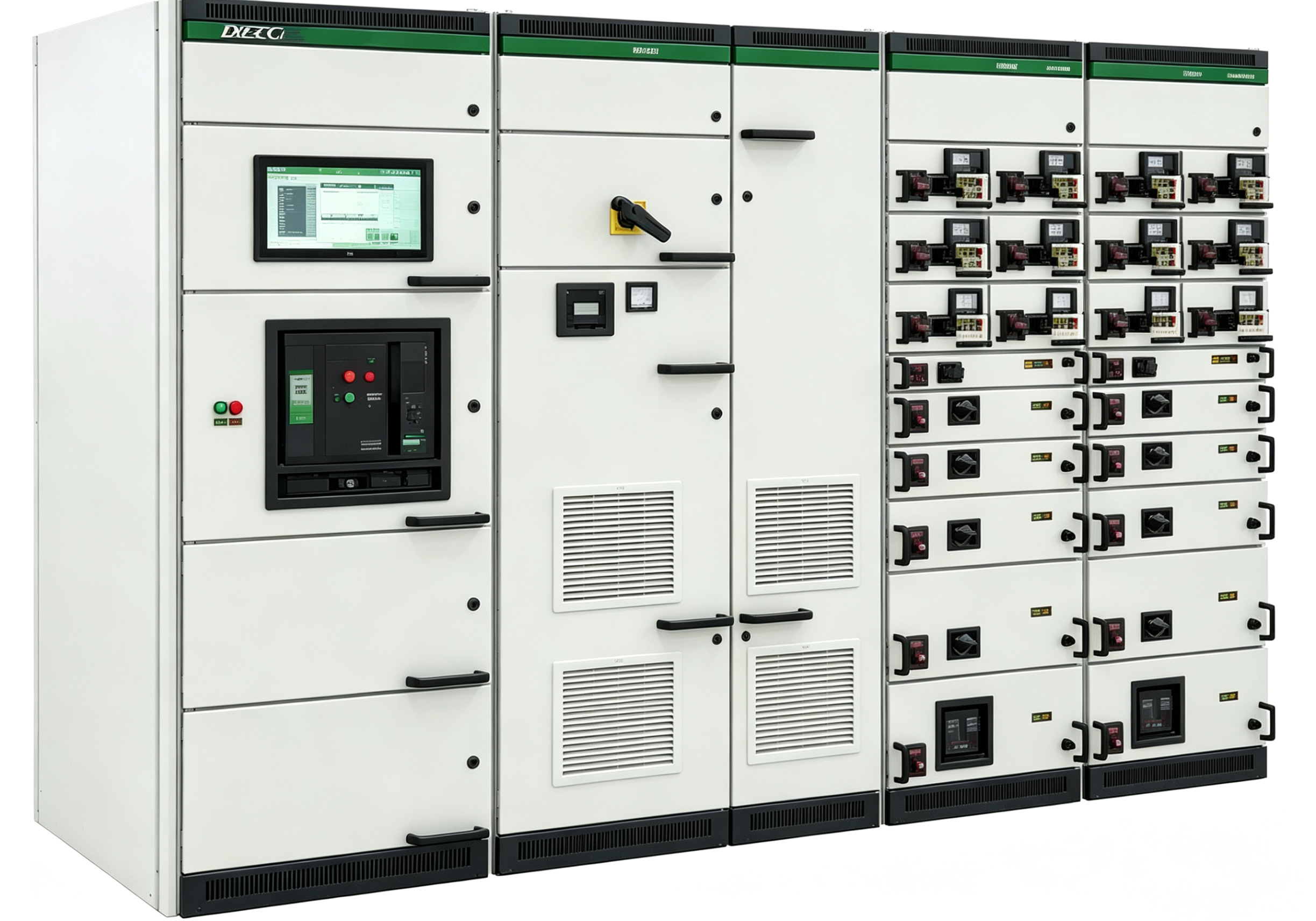
Beyond Basic Protection: The Deep Evolution of LV Switchgear
2026-07-20For those of us working daily with LV assemblies, the days when a distribution board was merely a metal box with breakers are long gone. The industry is shifting from product selling to lifecycle delivery, driven by evolving standards, real digitalization, and sustainability mandates. Here are the currents reshaping LV switchgear today, beyond the basics.
1. IEC 61439: Quantifying Form of Separation
Panel builders know the standard, but the strategic selection of Form 1 to Form 4b is now a financial calculation, not just a technical box-tick. In data centers and continuous-process plants, end users ask for quantified MTTR impact: Form 4b, with its complete isolation of functional units from busbars, can reduce downtime by an order of magnitude when multiple outgoing circuits need maintenance simultaneously. The trade-off is higher CapEx and larger footprint, but when minute-level downtime costs exceed the hardware premium, the choice is obvious. Smart specifiers are building cost-benefit models that turn internal separation from a catalog feature into a risk-management tool.
2. True Digitalization: From Meters to Predictive Algorithms
Hanging a multi-function meter on a Modbus loop is no longer enough. The genuine smart panel today integrates electronic trip units, wireless busbar temperature sensors, and edge gateways that perform harmonic analysis and mechanical wear estimation. It detects subtle anomalies—a 2°C abnormal rise at a bolted joint, a creeping increase in contact resistance—and pushes alerts before thermal runaway. This demands a system-level approach: sensor-ready structural design, EMI-conscious secondary wiring, and software that translates data into maintenance work orders. The hardware is merely the carrier; the value is in the prediction model.
3. The Carbon Reality: Environmental Product Declarations
With CBAM and green building certifications tightening, the carbon footprint of switchgear is under scrutiny. This extends beyond operational efficiency to embodied carbon in copper, steel, and surface treatment. Forward-looking manufacturers now provide Environmental Product Declarations (EPD) for main distribution boards, specify recyclable insulation, and minimize busbar support losses. What seems like a “nice-to-have” today will likely be a passport to premium projects within five years, especially in the EU and Singapore markets.
4. Modularity for Agile Power
Prefabrication has matured into genuine plug-and-play modular systems. In fast-changing facilities—light industry, R&D labs, edge data centers—modular switchgear allows feeders to be added or removed without upstream shutdowns, compressing expansion cycles from weeks to hours. The engineering hurdle lies not in standardizing copper connectors, but in ensuring that every possible module combination remains type-tested for temperature rise and short-circuit withstand. Only manufacturers with deep design verification capability can guarantee this.
Conclusion
The future of LV switchgear is defined not by steel thickness, but by system intelligence, lifecycle carbon data, and maintenance-predictive architectures. For consulting engineers and asset owners, the critical decision is no longer which panel is cheapest, but which partner can deliver verified performance, digital integration, and sustainability documentation over a 20-year lifecycle. That’s the new baseline for competitive differentiation.