
NewsNEWCENTER
Featured products

Contact Us
The New Battleground in LV Components: How Electronic Trip Units Are Redefining Protection
2026-07-23While much of the low-voltage discussion focuses on panels and busbars, the true intelligence of a modern distribution system lies inside the circuit breaker—specifically, in the electronic trip unit (ETU). The shift from thermal-magnetic to microprocessor-based trip technology is not merely a component upgrade; it fundamentally changes how we design protection, gather data, and maintain electrical assets.
1. Beyond Thermal-Magnetic Limits
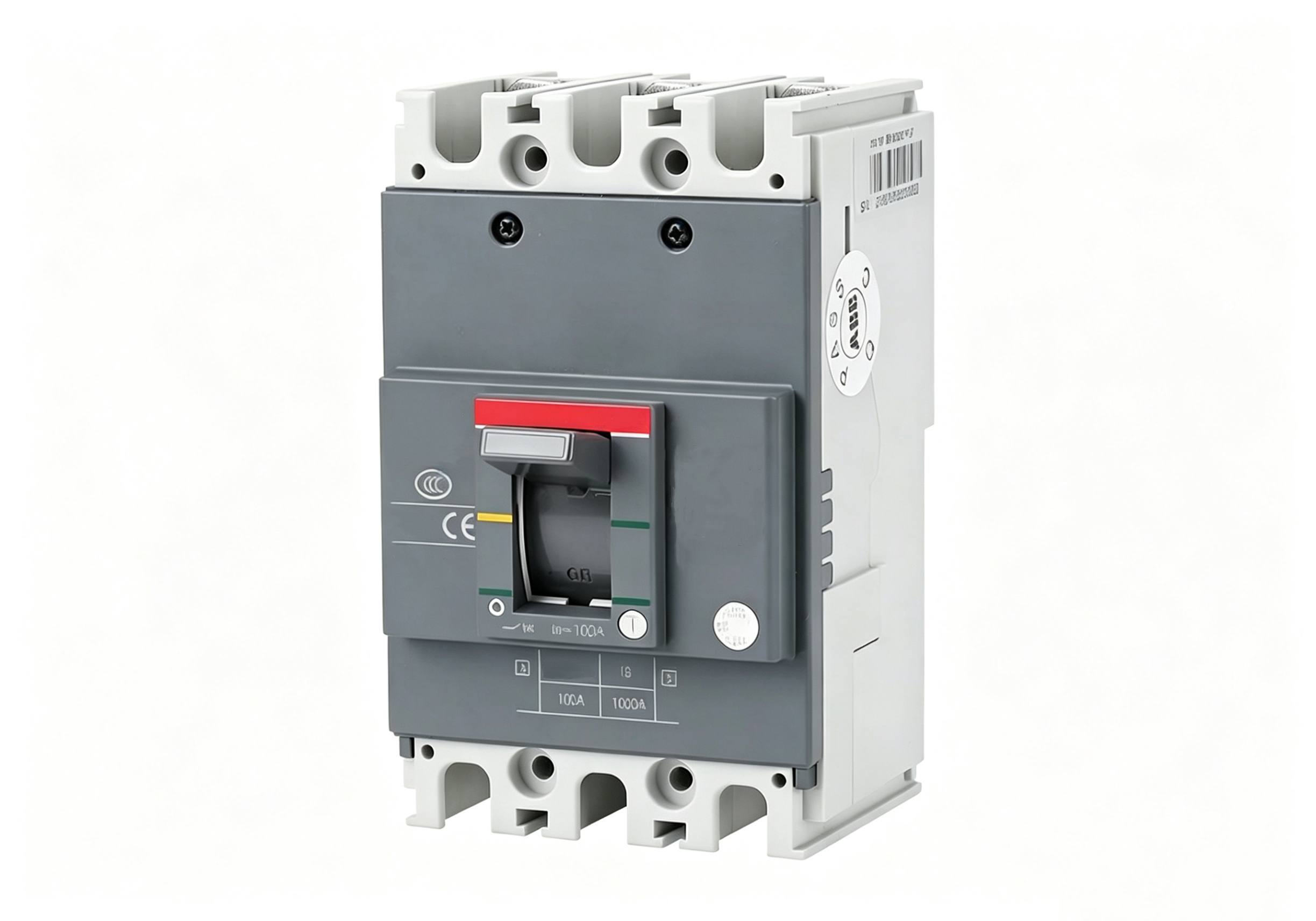
Traditional thermal-magnetic breakers rely on bimetallic strips and solenoids, making their protection curves fixed and susceptible to ambient temperature. ETUs, using current sensors and microprocessors, offer fully programmable LSIG protection—overload, short-time, instantaneous, and ground-fault—each with adjustable pickup and time settings. The same breaker can now serve different load types simply by loading a new parameter set, replacing guesswork with precision.
2. Breakers Become Data Sources
With built-in communication, an ETU continuously captures fault waveforms, peak currents, and cumulative I²t values to estimate contact wear. It can also monitor the trip coil current profile to detect mechanical binding. In critical facilities, this data feeds edge gateways that predict remaining life and automatically generate maintenance work orders—shifting the paradigm from reactive replacement to predictive maintenance.
3. Software-Defined Selectivity
Achieving selectivity between incoming ACBs and downstream MCCBs traditionally required manual curve comparisons, often leaving blind spots where both breakers trip. Zone Selective Interlocking (ZSI), embedded in advanced ETUs, uses a simple signal wire between tiers to locate the fault within milliseconds and isolate only the nearest device. This hardwired logic eliminates human setting errors and drastically reduces the risk of a total blackout.
4. Standardization and Interoperability
IEC 60947-2 Annex F and M set stringent requirements for ETU EMC and functional safety, but proprietary communication protocols remain a barrier. The push toward IEC 61850 integration for LV devices promises seamless interoperability, yet demands significant investment from manufacturers. Those who can deliver open-protocol, standard-compliant ETUs will lead the next phase of digital substation adoption.
5. Conclusion
When a circuit breaker evolves from an actuator to a sensor, the value of an LV component shifts from copper and steel to embedded software. For panel builders and specifiers, choosing a breaker today means choosing a protection logic that is upgradeable, integrable, and capable of supporting intelligent operations for the next decade. In the coming era, competitive differentiation will be written in code and silicon.