
NewsNEWCENTER
Featured products

Contact Us
Motor Protection at a Crossroads: Thermal Relays, MPCBs, and Electronic Relays
2026-07-27Electric motors consume close to 70% of industrial electricity, and behind every burnt winding is a protection device that failed at its job. In low-voltage systems, motor protection components are among the highest-volume yet most debated categories. Three distinct technologies—thermal overload relays, motor protective circuit breakers (MPCBs), and electronic motor protection relays—now coexist, forcing panel builders and specifiers to navigate a complex trade-off.
1. Thermal Relays: The Resilient Incumbent
Thermal relays use bimetallic strips heated by motor current to trip a contact. Their simplicity, low cost, and inherent thermal inertia matching a motor’s heating curve keep them dominant for small and non-critical motors. They require no auxiliary power and tolerate short-duration overloads without nuisance tripping—a valuable trait in fluctuating load environments. Yet their physical nature introduces ambient-temperature dependency, incomplete phase-loss protection, and an inability to differentiate locked-rotor from overload. In processes where unplanned stops are unacceptable, these limitations are proving increasingly costly.
2. MPCB: Compact Integration
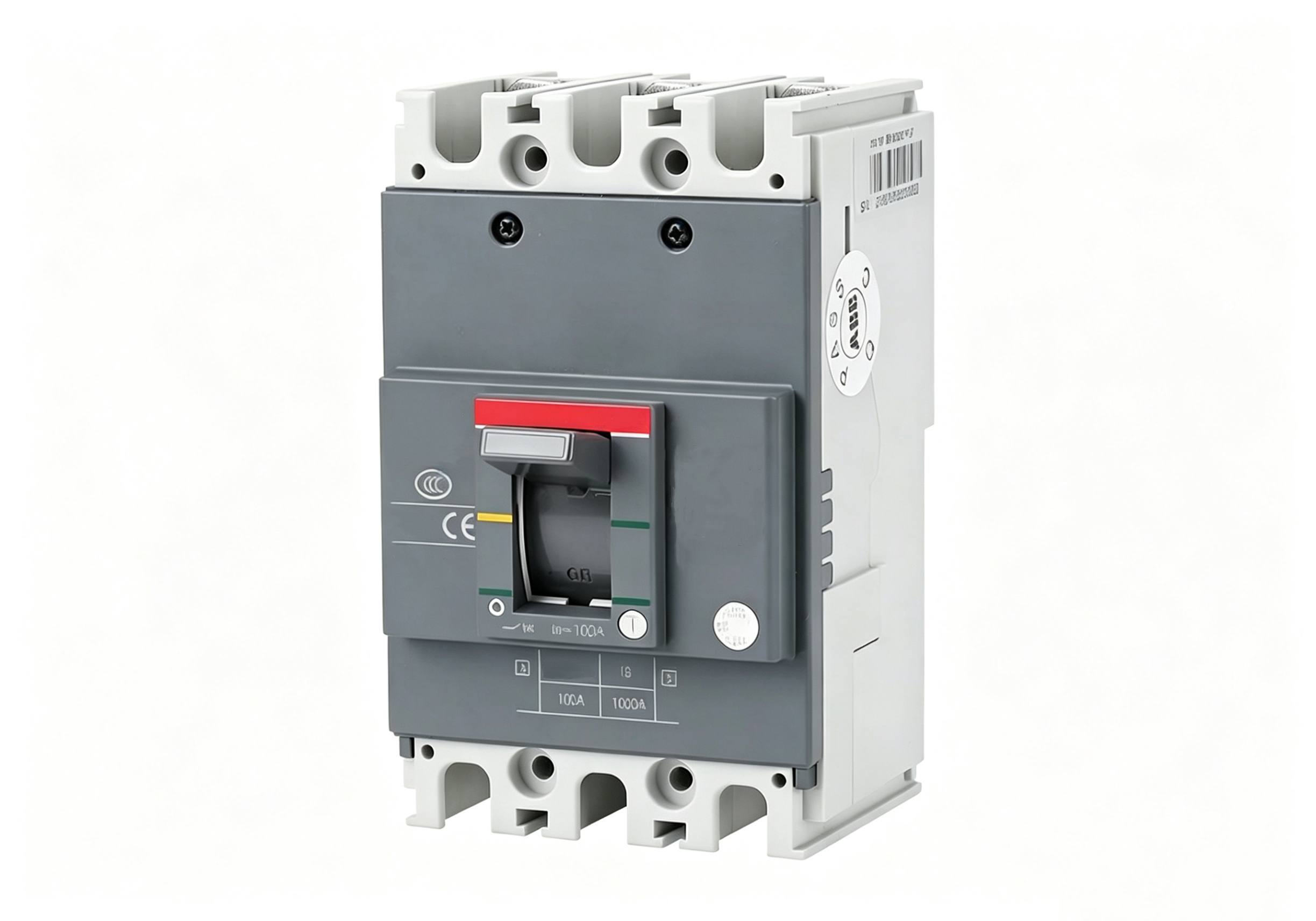
Motor protective circuit breakers integrate overload protection, short-circuit interruption, and switching into a single device, eliminating the separate contactor-plus-thermal-relay combination. Short-circuit breaking capacity can reach 50-100 kA, with magnetic tripping that clears faults far faster than a traditional three-component assembly. For panel builders, the attraction is immediate: less wiring, fewer terminals, lower assembly labor, and reduced cabinet footprint. MPCB penetration is rising fast in the 0.06-45 kW range, driven as much by production efficiency as by protection performance.
3. Electronic Relays: Intelligence on the Motor Feeder
When a single motor is worth six figures or hourly downtime dwarfs hardware cost, the electronic motor protection relay becomes essential. Using current transformers or Rogowski coils, these devices offer programmable protection for overload, stall, phase unbalance, ground fault, and more, while logging pre-fault waveforms, start counts, and running hours. With communication ports, they feed motor health data into DCS or cloud platforms, enabling centralized monitoring and predictive maintenance. In petrochemical, mining, and water treatment, electronic relays are now baseline spec, not optional.
4. Layered Selection, Not Winner-Take-All
The belief that “electronics will replace thermals” misunderstands the market. Real-world selection is rational and tiered: thermal relays or MPCBs are entirely adequate for standard fans and pumps; MPCBs excel where adjustable trip settings and high interrupting ratings add value; electronic relays earn their place on critical compressors, extruders, and large conveyors where condition monitoring justifies the premium. The skill lies in matching protection technology to the operational consequence of failure, cabinet space, budget, and digital roadmap—not in chasing “more advanced” labels.
5. Conclusion
Motor protection is evolving not toward a single winner, but toward precise, application-specific optimization. The next technical waves will include MPCBs with embedded communication, electronic relays pushing edge-based diagnostics, and thermal relays benefiting from new materials that shrink temperature drift. Regardless of the technology path, the ultimate purpose remains unchanged: fewer unplanned stoppages, and a clearer view of the motors that keep industry turning.