
NewsNEWCENTER
Featured products

Contact Us
The Invisible Guardian of Uninterrupted Power
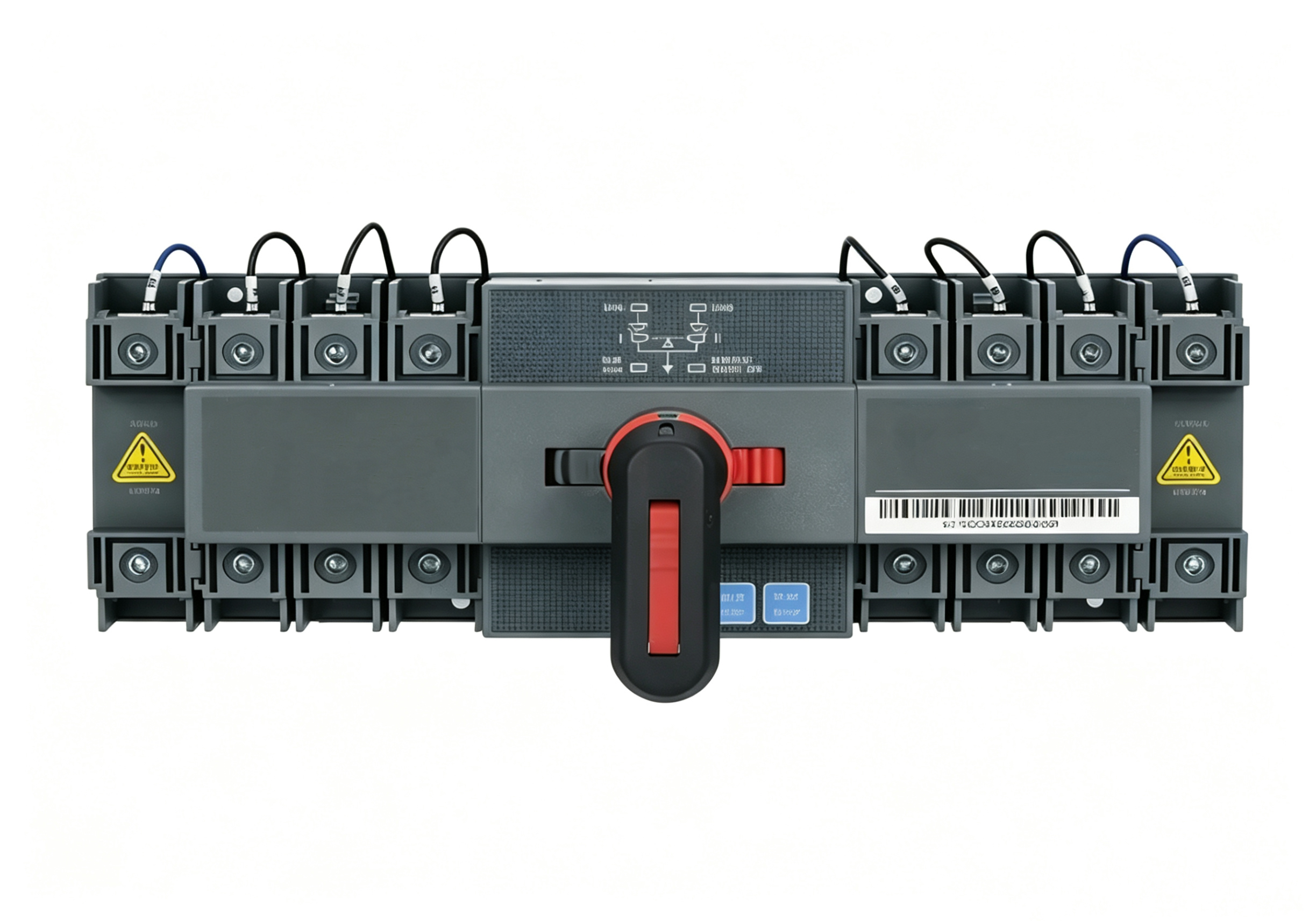
2026-08-04Have you ever experienced a situation where your building has two utility feeders, yet the moment the primary supply fails, your equipment instantly goes dark? The culprit is very likely the automatic transfer switch—it failed to complete the transfer within the required time, or it didn’t switch correctly at all. The ATS is the core device for ensuring continuous power supply to critical loads. In simple terms, it acts as an intelligent valve, constantly monitoring the main power source; whenever the primary supply experiences undervoltage, phase loss, or complete loss, it automatically transfers the load to the backup source. The entire process typically takes anywhere from tens of milliseconds to a few seconds, so fast that you barely notice any interruption. One of the most common points of confusion is the difference between PC-grade and CB-grade ATSs. Many users assume that a breaker-equipped ATS is somehow superior, but in reality each has its own application: PC-grade (isolating type) uses an integrated isolating switch structure, with switching mechanisms and arc-extinguishing systems specifically designed for frequent transfers; it offers excellent electrical isolation and extremely high reliability, making it ideal for facilities with stringent continuity requirements, such as data centers and hospital operating rooms. However, PC-grade units do not incorporate overload or short-circuit protection, so they must be used with separate upstream circuit breakers. CB-grade (breaker type) consists of two circuit breakers combined with mechanical interlocking; it provides built-in short-circuit and overload protection, is more compact, and generally costs less, making it suitable for office buildings, shopping malls, and other general load scenarios. But its transfer speed is usually slower than PC-grade, and the circuit breakers themselves have limited operational life—frequent switching may cause premature wear. When selecting an ATS, three key factors are often overlooked: first, transfer time—different loads tolerate different durations of power loss; PC-grade ATSs typically achieve 50‑200ms, while CB-grade may take several hundred milliseconds or more. For IT equipment, choose a model with a transfer time ≤100ms, and consider using a UPS in conjunction. Second, the utilization category (e.g., AC‑33iA) indicates the device’s capability to switch loads—AC‑33iA means it can handle mixed loads including motors under frequent switching, whereas AC‑31B is only for purely resistive loads; choosing the wrong category may cause arcing and contact burnout during transfer. Third, the number of poles and neutral handling—a 4‑pole ATS can disconnect the neutral, suitable for TT or TN‑S systems, but in TN‑C systems the combined PEN conductor must never be interrupted, so a 3‑pole ATS is mandatory. Getting this wrong can lead to equipment damage or even fatal electric shock. During installation and commissioning, several hidden pitfalls must be addressed: phase sequence consistency between the primary and backup supplies is essential—if they differ, motors may reverse rotation or equipment malfunction; many installers measure voltage but skip phase‑sequence checks, creating serious risks. Mechanical interlocking and electrical interlocking must both be implemented—mechanical interlocking is a physical hard connection that prevents both sources from closing simultaneously (otherwise a “parallel operation” disaster occurs), while electrical interlocking provides auxiliary signals; never rely solely on electrical interlocking. Also, the control power for the ATS controller is typically taken from the primary side, but if the primary supply completely fails, the controller itself loses power and cannot issue the transfer command. The correct approach is to power the controller from both sources or provide an internal battery. For common fault scenarios, if the primary power fails but the ATS does not switch, first check whether the controller has power; if it does but no switching signal is generated, the voltage threshold settings may be inappropriate (e.g., set too low to detect actual failure). If a loud arcing noise occurs during transfer, it usually indicates worn contacts or an aging arc chamber—immediate power‑off maintenance is required, otherwise a short‑circuit explosion may follow. Frequent oscillation (back‑and‑forth switching) often happens when both sources have fluctuating voltages; adjusting the delay settings (e.g., adding a 0.5‑second confirmation delay) can prevent “nervous” switching. Though the ATS remains silent in normal operation, every transfer it performs at critical moments directly impacts equipment safety and business continuity. Spending an extra minute verifying specifications during selection, and an extra ten minutes testing interlocking during installation, can save hours of downtime later. Remember: the truly excellent ATS is the one you never notice—because every transfer happens so smoothly and precisely that you remain completely unaware.