
NewsNEWCENTER
Featured products

Contact Us
Power Distribution Cabinet (DPF): The Last Meter of Data Center Power Distribution
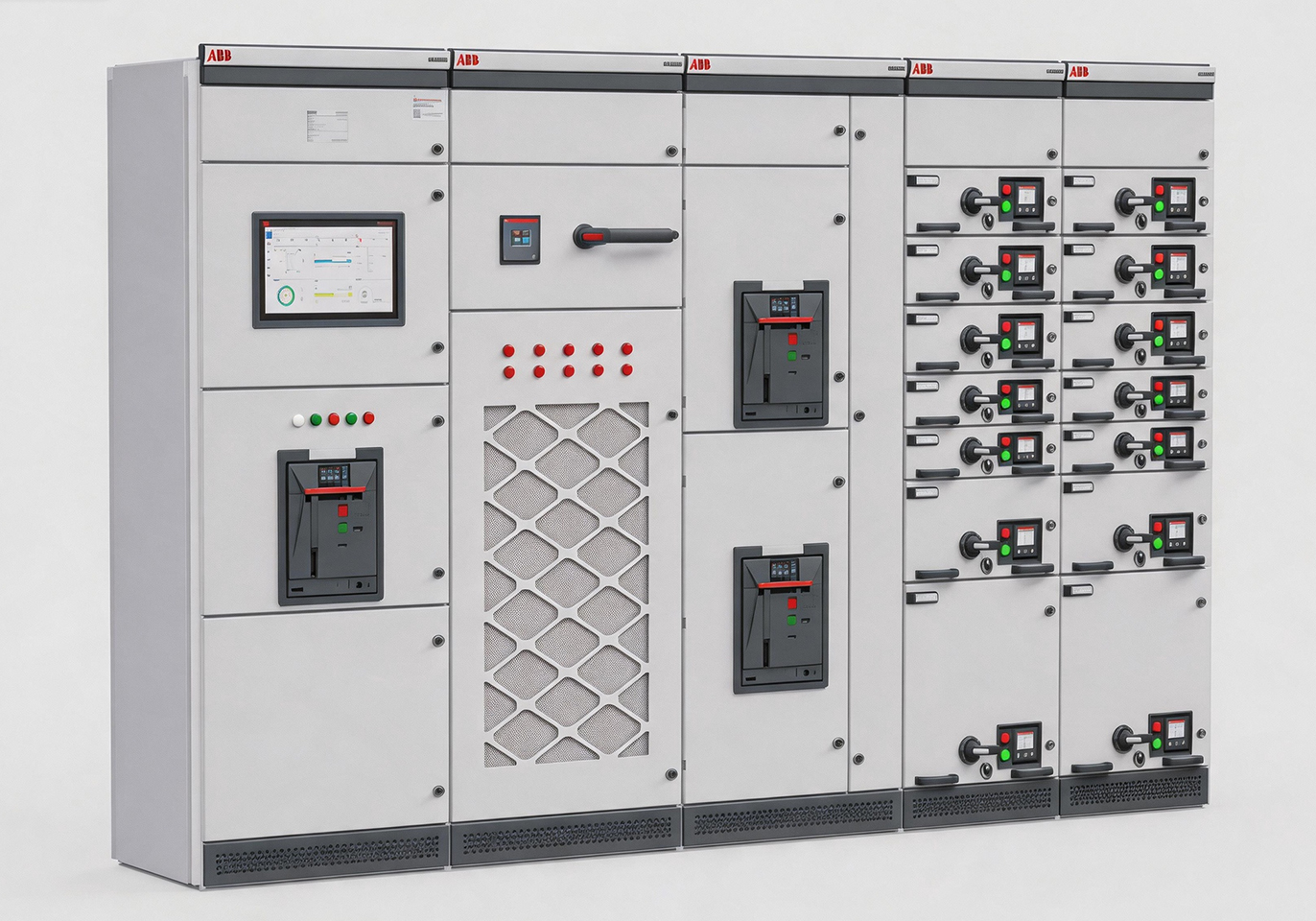
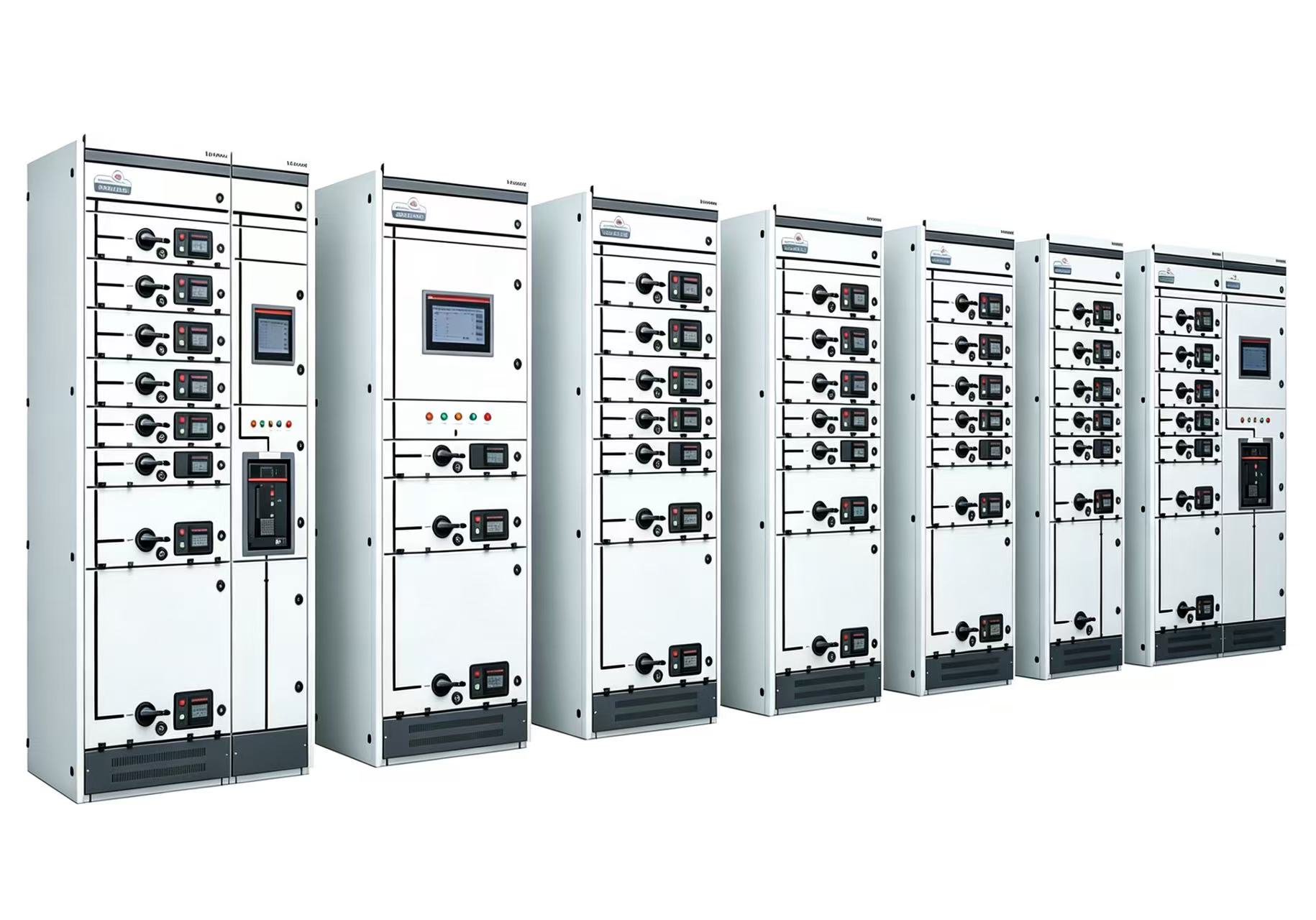
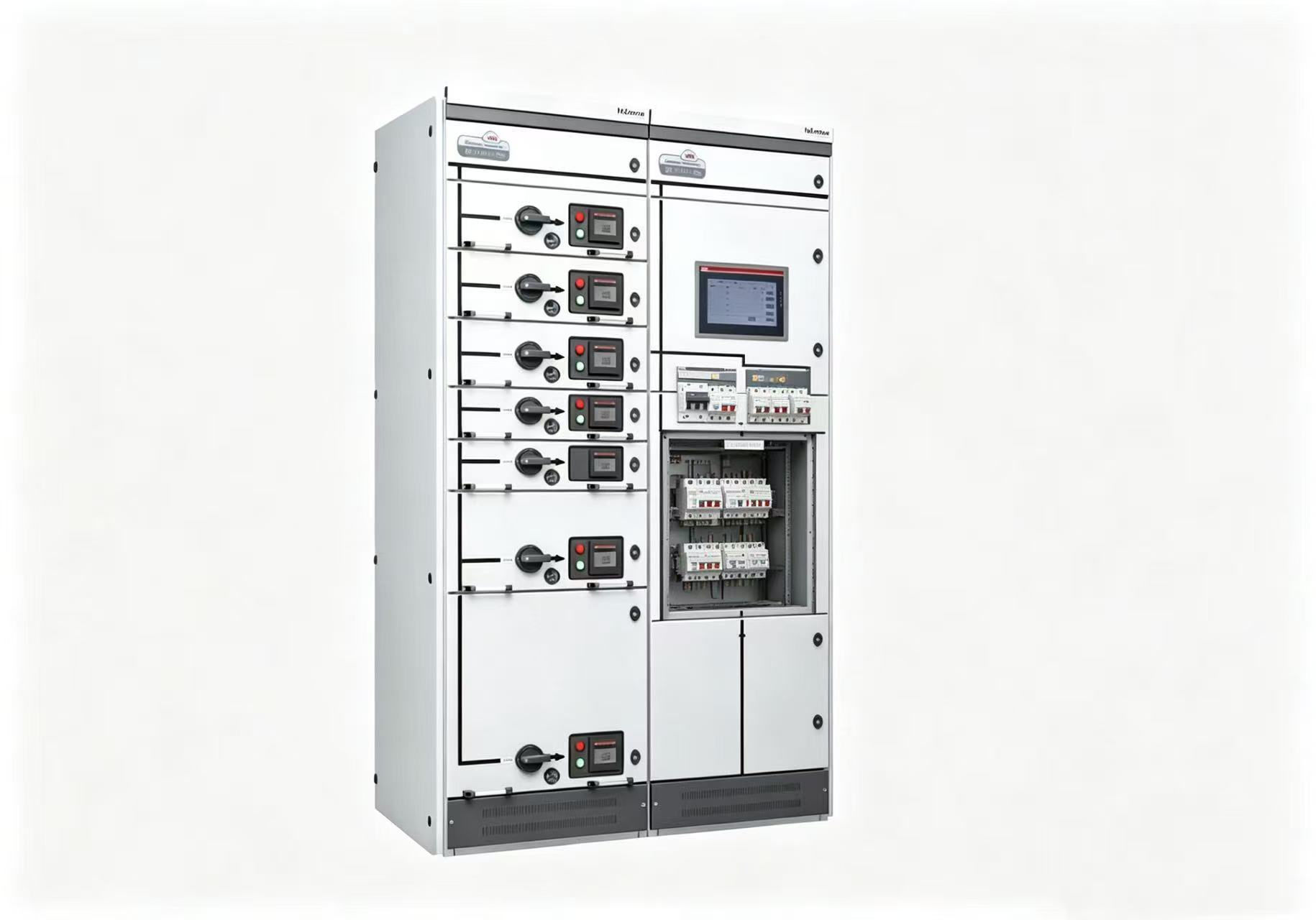
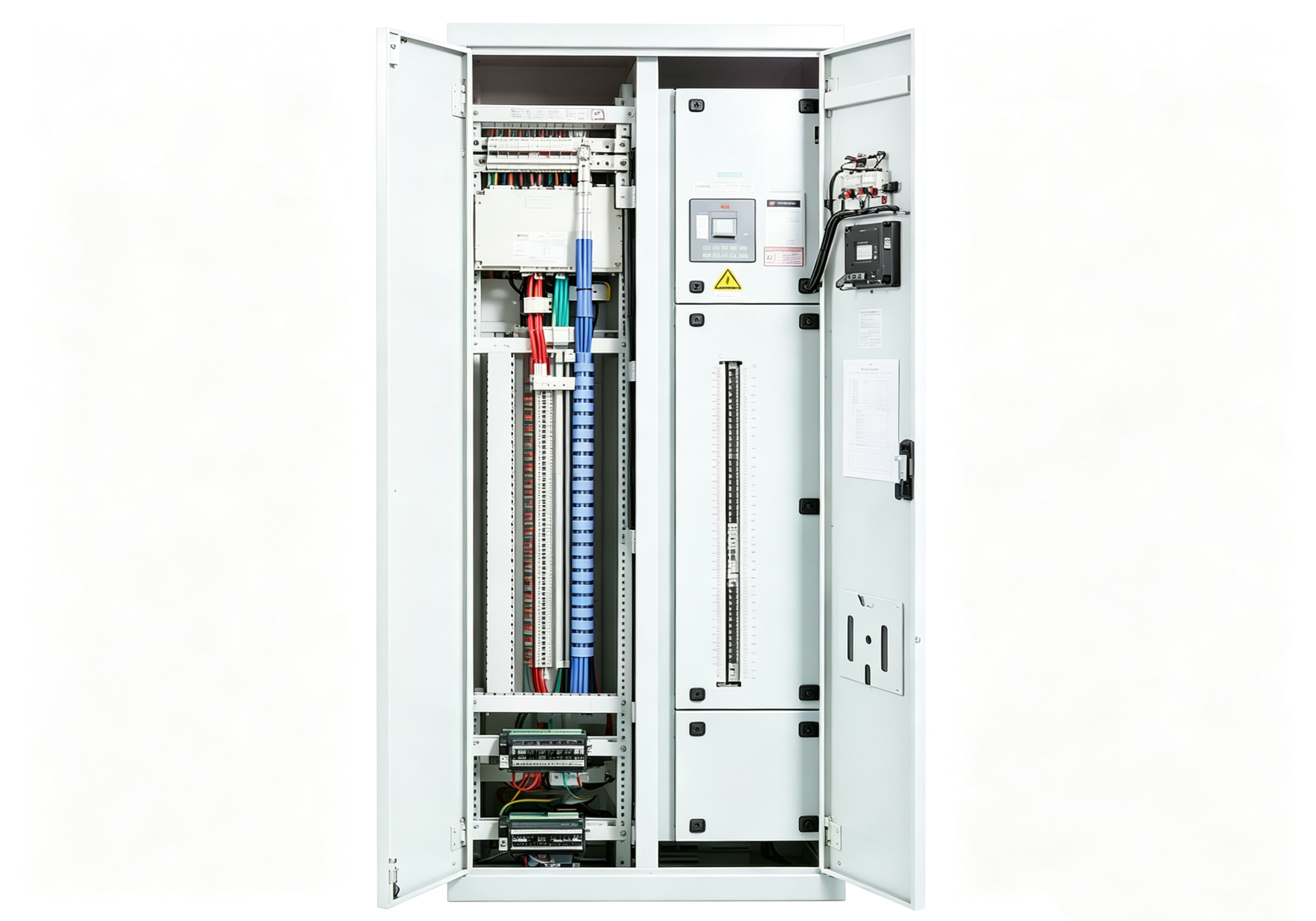
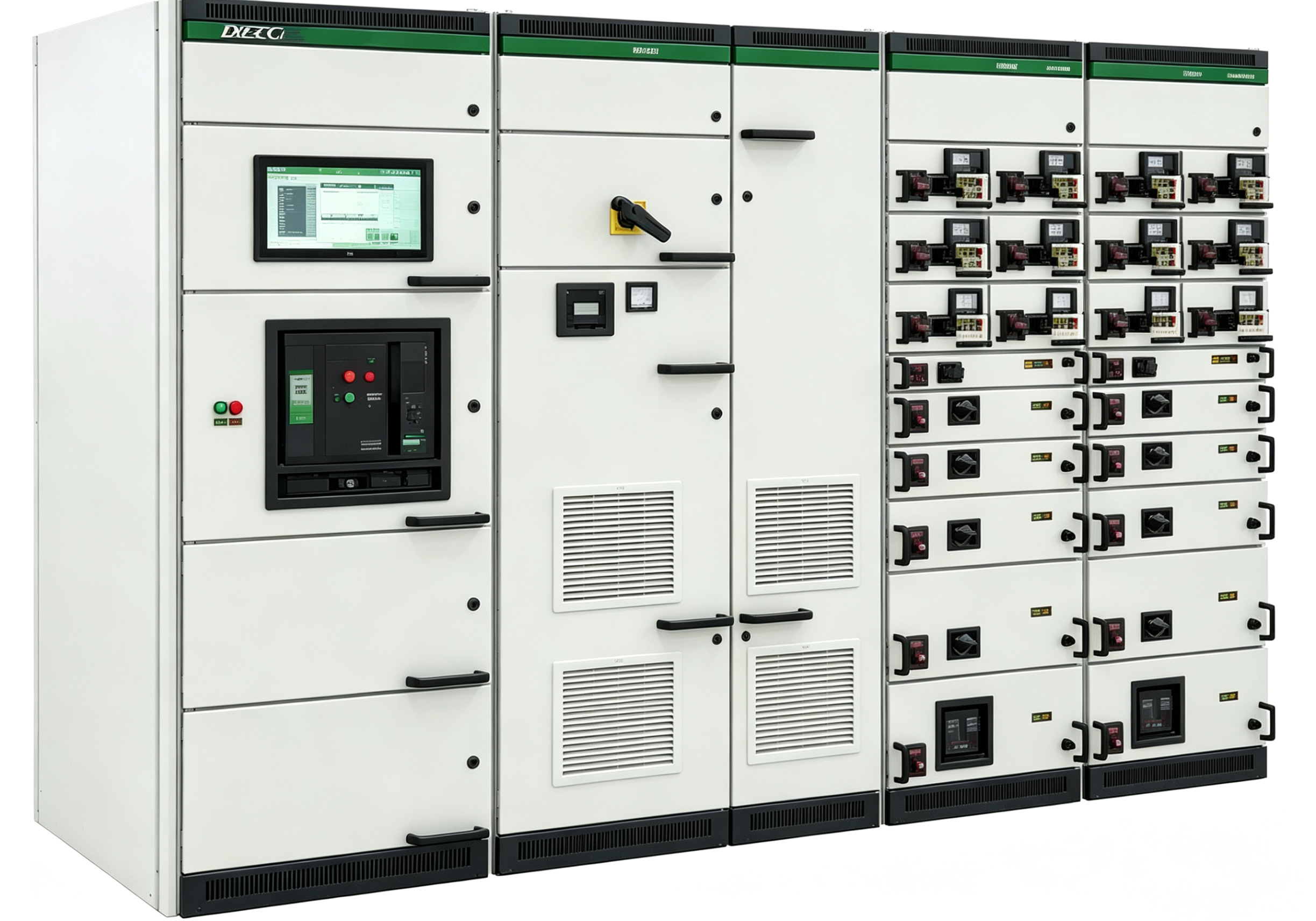
2026-08-18In a data center, the most eye‑catching elements are usually the neatly arranged rows of server racks and the blinking hard drive indicators. But few people notice the greyish‑white vertical cabinets at the end of each row—these are the power distribution cabinets (DPF, also known as row‑head cabinets). If the transformer is the heart of the data center, the UPS is the lungs, and the main low‑voltage switchgear is the skeleton, then the DPF is the capillary network connecting the power backbone to every single server. It is responsible for taking power from the UPS or utility supply and distributing it, according to different voltage levels (AC 380V, DC 48V, or high‑voltage DC 240V/336V), precisely to every device in each server row. The DPF doesn’t make protection decisions—that’s the job of circuit breakers; it doesn’t perform power quality correction—that’s the compensator’s role. It does only one thing: delivering power accurately, safely, and monitor‑ably to the very last meter. Yet the quality of distribution at this last meter directly determines server stability and rack availability. A poorly designed DPF puts the entire row of servers at risk of voltage instability, circuit overload, or even complete power loss. The most basic but most easily mistaken parameter of the DPF is voltage type. Data center equipment typically uses one of three voltage systems: AC 380V is the most common distribution standard, suitable for most general‑purpose servers, networking equipment, air conditioning, and lighting—AC DPFs typically accept dual 380V inputs (mutually redundant) and distribute through miniature circuit breakers (MCBs) or molded case circuit breakers (MCCBs) on each output circuit to individual devices or PDUs; DC 48V is the classic voltage for the telecommunications industry, widely used in base stations, core network equipment, and older data centers—DC DPFs take input from 48V battery banks or rectifiers and use fuses or DC‑rated circuit breakers for output protection; and high‑voltage DC 240V/336V is an emerging standard that offers higher efficiency than AC UPS systems (eliminating the inverter stage) and is increasingly adopted in large cloud data centers—these DPFs use DC‑specific miniature circuit breakers and impose stricter insulation and safety requirements. A fatal selection error is connecting AC 380V equipment to a DC 240V DPF, or vice versa—while some equipment might “get away with it” temporarily, long‑term operation will inevitably damage the power supply modules or render protection devices ineffective. Always verify the voltage type on the DPF nameplate against the equipment’s input specifications before wiring. In the typical data center floor layout, each row of racks has a DPF installed at its head end (usually closest to the aisle). Power flows from the main electrical room through floor distribution boxes to the row‑head cabinet, which then distributes via cables or busways to every server in that row. This “one row, one cabinet” layout significantly shortens the final distribution distance, reduces line losses and voltage drops, and simplifies maintenance and future expansion—to add or adjust loads in a given row, you only need to work on that row’s DPF without affecting others. Load balancing is the core management objective for the row‑head cabinet. If one row runs at high load while an adjacent row is lightly loaded, the initial capacity planning was inadequate—this accelerates aging of the DPF’s internal circuits and raises overheating risks. The ideal load rate is 60‑70% of rated capacity, leaving sufficient headroom for peaks while maintaining economical operating efficiency. A qualified modern DPF is far more than “a metal cabinet full of switches.” It must include, as standard or optional, electrical parameter monitoring capable of displaying input voltage, current, power, frequency, output branch currents and power, switch status (ON/OFF), and cumulative energy consumption. These data are shown in real time on a touchscreen or digital display mounted on the door, and simultaneously uploaded to the data center infrastructure management (DCIM) system via RS485 or Ethernet. Real‑time monitoring of output branch currents is one of the DPF’s most critical functions, because data center loads are dynamic—servers draw more current during peak business hours and less at night when some servers enter low‑power states. If a branch current persistently approaches the breaker’s rated value, you should consider migrating some load to other branches to prevent overload tripping and accidental server shutdowns. Neutral current monitoring is another often‑overlooked important metric. In data centers with large numbers of single‑phase switch‑mode power supplies, three‑phase loads may appear balanced, but neutral current can be abnormally high—typically due to 3rd‑harmonic currents summing on the neutral conductor. Without neutral current monitoring, this hidden hazard goes undetected. The DPF’s cable entry and exit methods generally come in three options: top entry/exit, bottom entry/exit, or mixed entry/exit. The selection must match the actual cable routing structure of the data center: top entry/exit is used when cables are routed through overhead cable trays (below the ceiling); bottom entry/exit is used when cables run beneath the raised floor (in the plenum); and mixed entry/exit (top in, bottom out, or vice versa) offers flexibility for complex layouts. Choosing the wrong direction leads to insufficient cable length on site, requiring re‑drilling or additional transition busbars—not only increasing installation cost and difficulty, but also introducing extra connection points that become potential failure sources. Inside the DPF, a Class C surge protective device (SPD) is typically provided to suppress lightning‑induced and switching overvoltages. However, the effectiveness of surge protection depends on the quality of the grounding system—the DPF’s grounding terminal must be reliably connected to the data center’s equipotential grounding grid, with ground resistance less than 1 ohm. A common misconception is that installing an SPD is sufficient while ignoring the critical requirement that the SPD’s ground lead must be shorter than 0.5 meters; if the ground lead is too long, the residual voltage rises significantly due to lead inductance, rendering the SPD practically useless. Additionally, all metal parts of the DPF—the enclosure, door, and all accessible metal components—must be properly grounded to ensure personnel safety. In routine maintenance, several key checks are essential: infrared temperature measurement—regularly scan terminal blocks, busbars, and circuit breakers inside the DPF with an infrared thermometer; if any terminal is significantly hotter than the ambient temperature (more than 20°C differential), it indicates poor contact requiring immediate tightening or replacement; dust cleaning—although the DPF has some ingress protection, dust accumulates over time and, when moistened, can cause tracking or short circuits, so vacuuming or blowing with dry compressed air every six months is recommended (power off or isolate safely first); indicator and meter verification—periodically check that the meter readings on the DPF panel match actual measured values; if deviation exceeds the accuracy specification, recalibrate or replace the meter; and bolt tightening—busbar joint bolts and terminal bolts may loosen due to thermal expansion and contraction during initial operation, so a re‑torque is recommended within the first month of service, followed by annual checks thereafter. When data center loads grow, DPFs often require expansion—adding output circuits or upgrading input breakers. But before any expansion, you must verify whether the DPF’s busbar capacity and cooling capability can support the additional load. Blindly increasing load may overload the busbars (causing insulation melting) or cause thermal nuisance tripping due to insufficient heat dissipation. Any expansion plan must calculate total load current, busbar cross‑section, and cooling conditions, and be implemented only after evaluation by a qualified engineer. The DPF may not be the most expensive component in the distribution chain, but it is the last‑meter distribution hub closest to the load. The quality of its design and maintenance directly determines the power quality delivered to every server in the rack. Neglecting it is equivalent to planting a time bomb at the most vulnerable point of your data center.